
The Microsoft Loft is a creative space located on the seventh floor of Microsoft's flagship NYC retail store at 677 Fifth Avenue. The concept envisioned by Purepartner aimed to create a functional and transformational multi-use event and meeting space in line with Microsoft's mission.
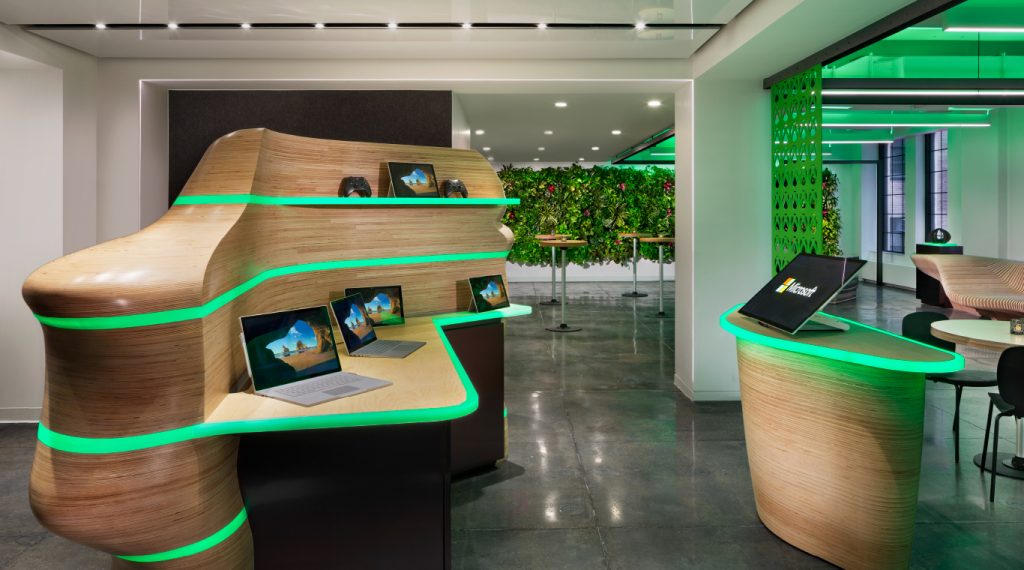
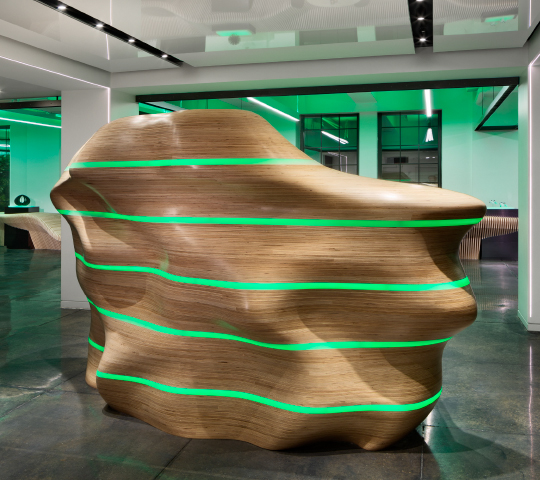
The Factory NYC was brought into the project to provide the massive plywood sculptural forms that serve as elegant furnishings for the company’s products and visitors.

 Interview with Jonathan Epstein, General Manager at The Factory NYC
Q: How did you work with the client to ensure the furniture followed the concept?
A: Our client had a great designer who was able to provide a 3D mesh of the raw forms. Through lots of careful manipulation of the original form, we were able to produce pieces that maintained the original design intent that was sliceable for our CNC machine. In the end, we were grateful for the opportunity to work with everyone involved and so happy with the result of our collaboration.
Q: Did you encounter any technical challenges with the making of the integrated lighting of the sculpture/TV stand, desk, or bench?
A: The lighting integrated in the TV stand and desk, presented a bit of an engineering challenge. The thickness of the lit areas was substantial and ran the risk of structural integrity in certain areas. We ended up using two-inch thick sculpted acrylic to hold the weight of the wood and maintain the form while having a consistent glow. Our team worked diligently to test and ensure these elements would work efficiently and effectively. For the bench, we had to make sure it could withstand a certain amount of weight. The challenge was to find the balance between strength and weight, so we calculated pounds per square foot before milling, and sure enough it stood strong.
Crafting the Plywood Forms
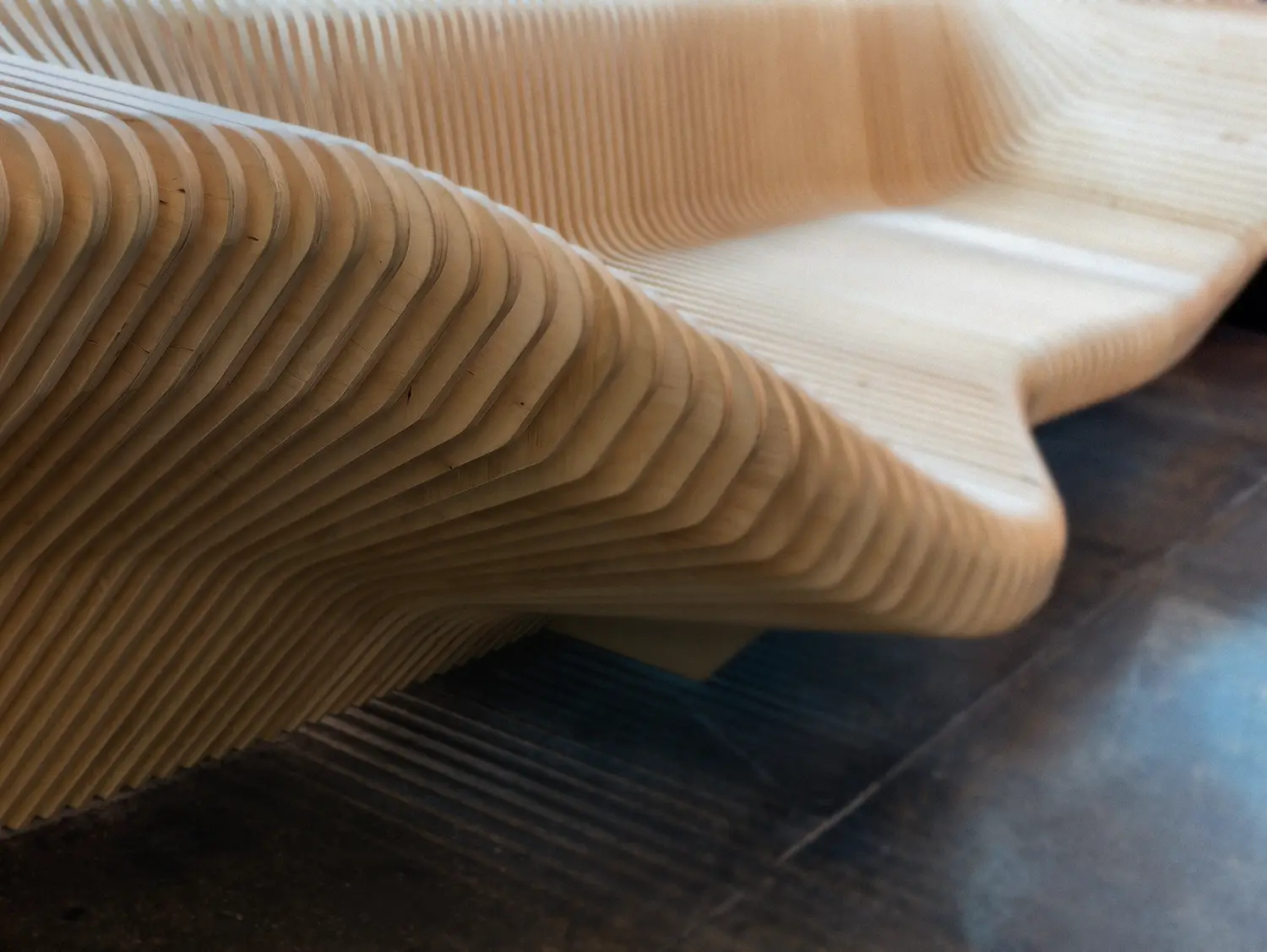
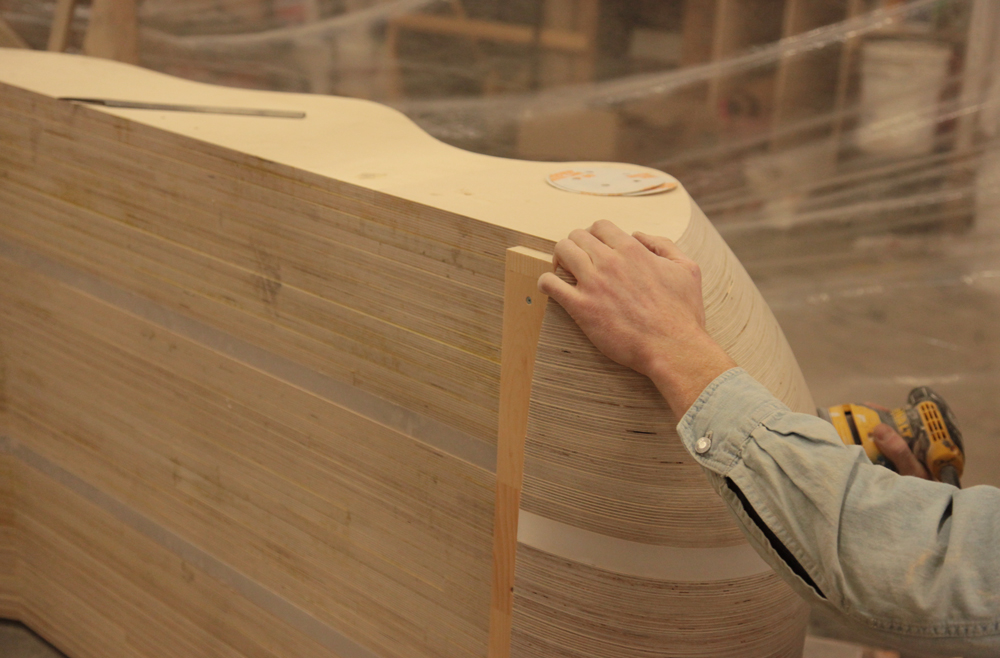
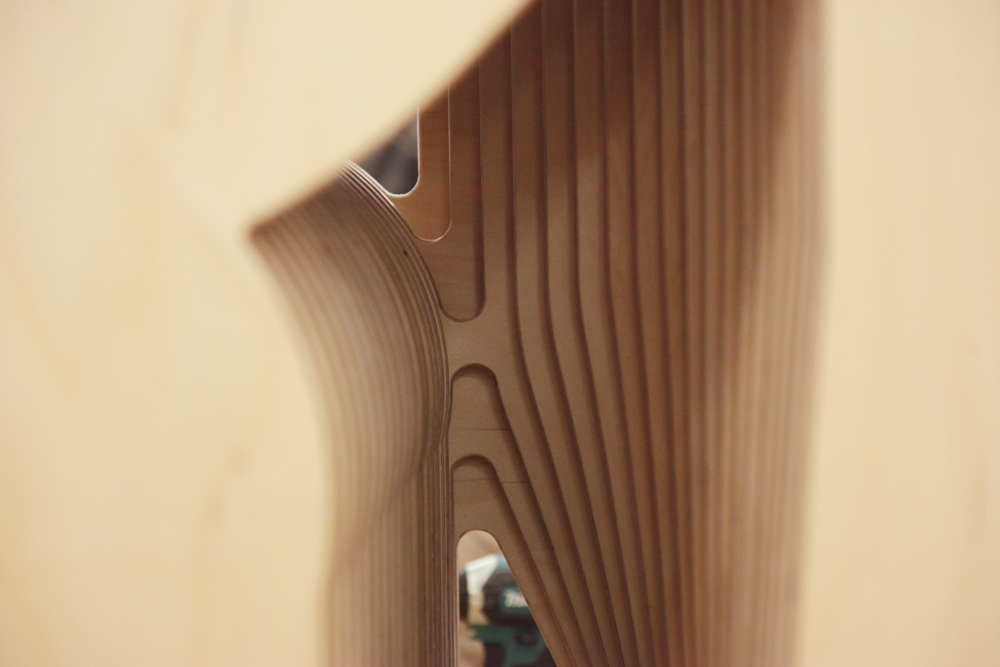
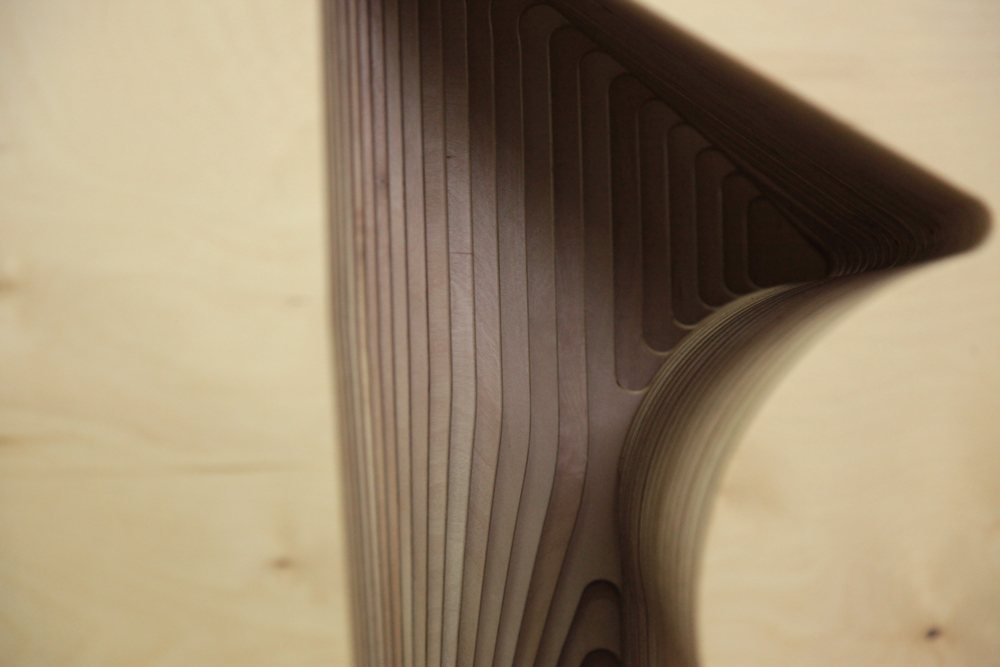
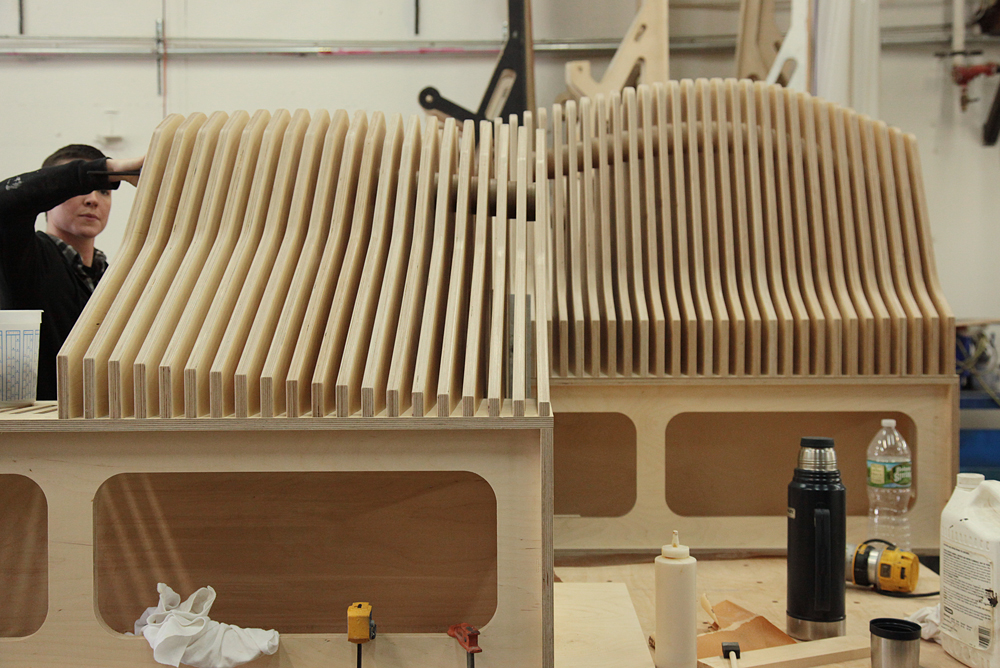
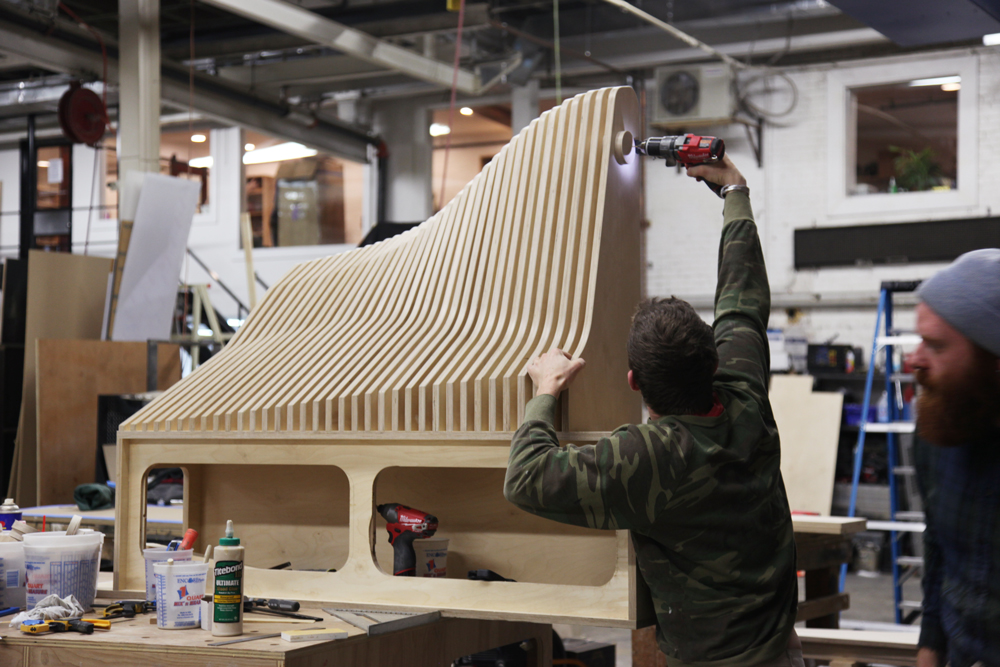
Each of the forms were manufactured at The Factory NYC in Brooklyn, NY. The project team resolved the forms using CAD and used the in-house CNC routing and machining to create the rough form. The pieces were then assembled and then sanded, integrating custom lighting into each of the forms.
Q: What was the assembly and installation process like?
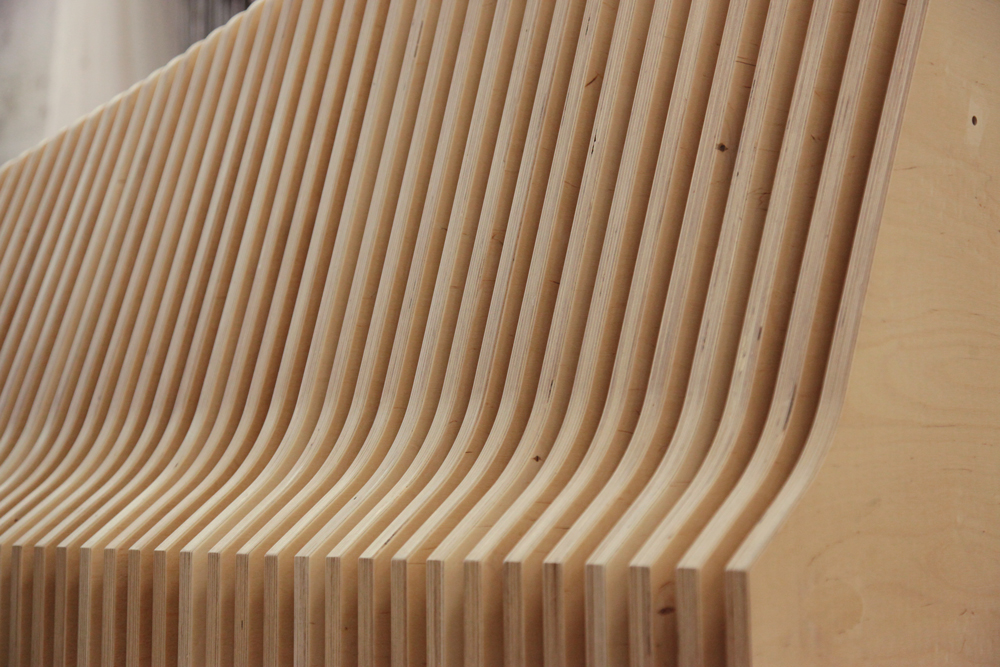
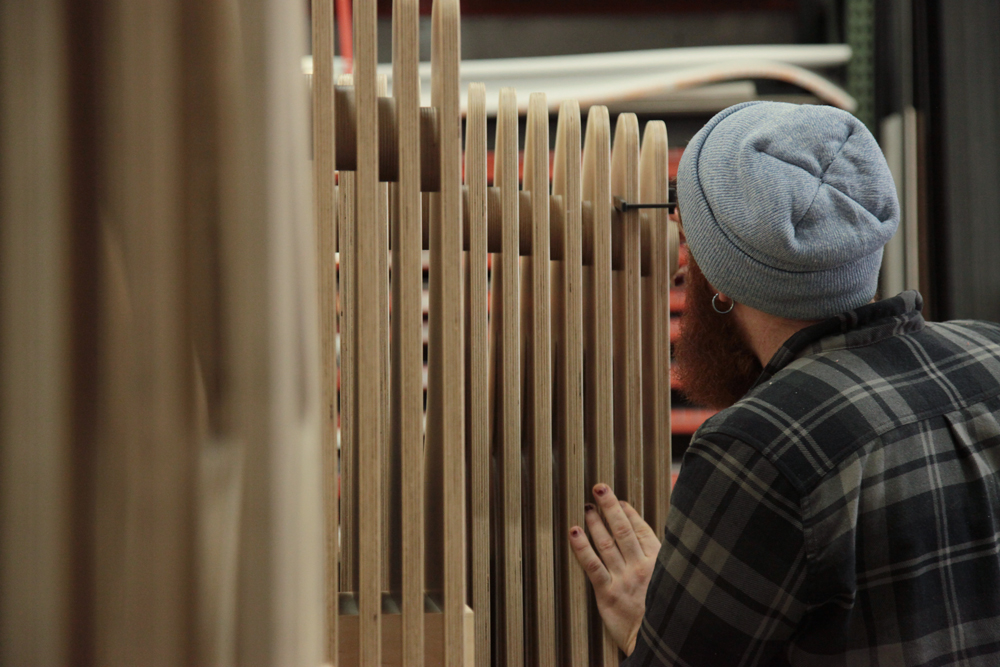
A: The assembly included the forms sliced based on an average thickness of 30 sheets of baltic birch. Each slice was sequenced and milled in batches to keep a steady workflow. Keeping track of thousands of parts around can turn into a giant jigsaw puzzle very quickly. We utilized custom jigs to glue slices into chunks, and then different sets of jigs were used to glue those chunks into the finished piece.
Unfortunately, the building loft did not have an elevator that made it all the way to the top floor. So we engineered it in sections that were able to make tight turns and hand-carried up the fire escape. About 300 sheets of 3/4″ thick baltic birch were used, and the entrance piece itself weighs over 3200 pounds. It was a lot of work, but I believe all parties involved were very pleased with the result.
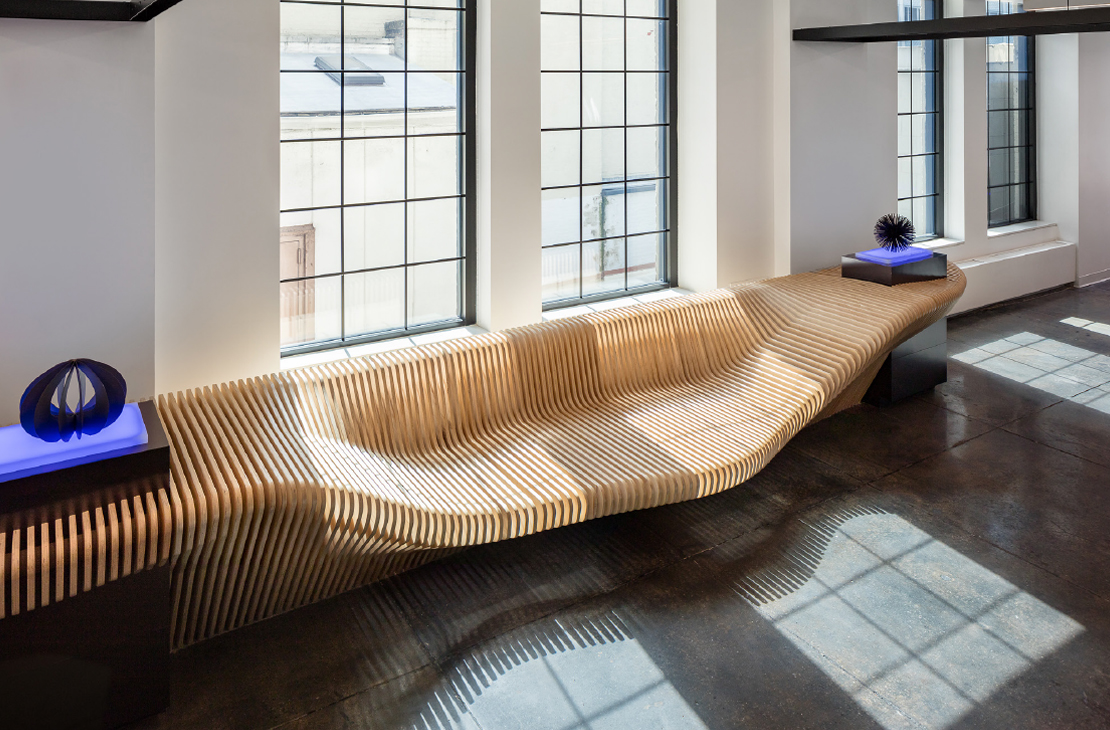
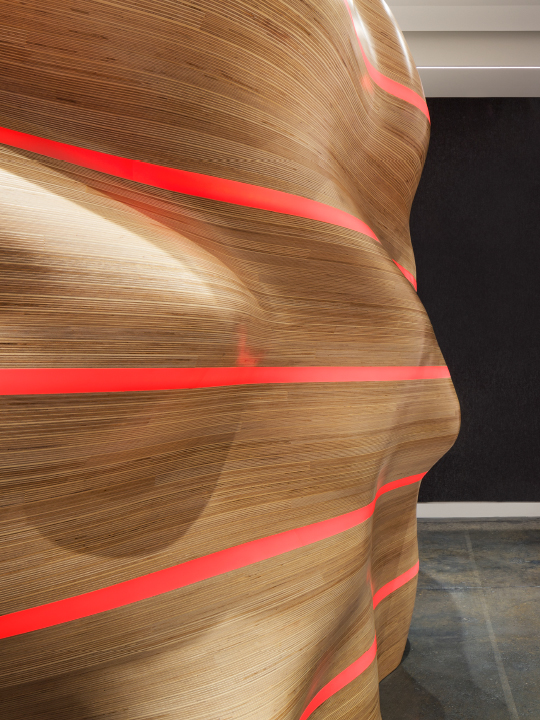
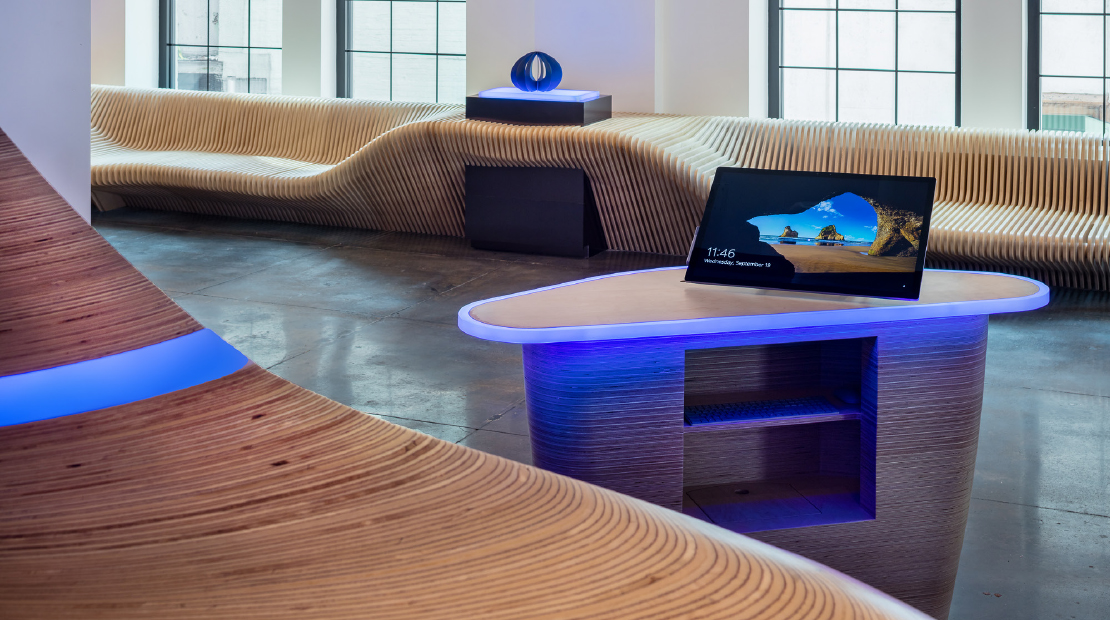
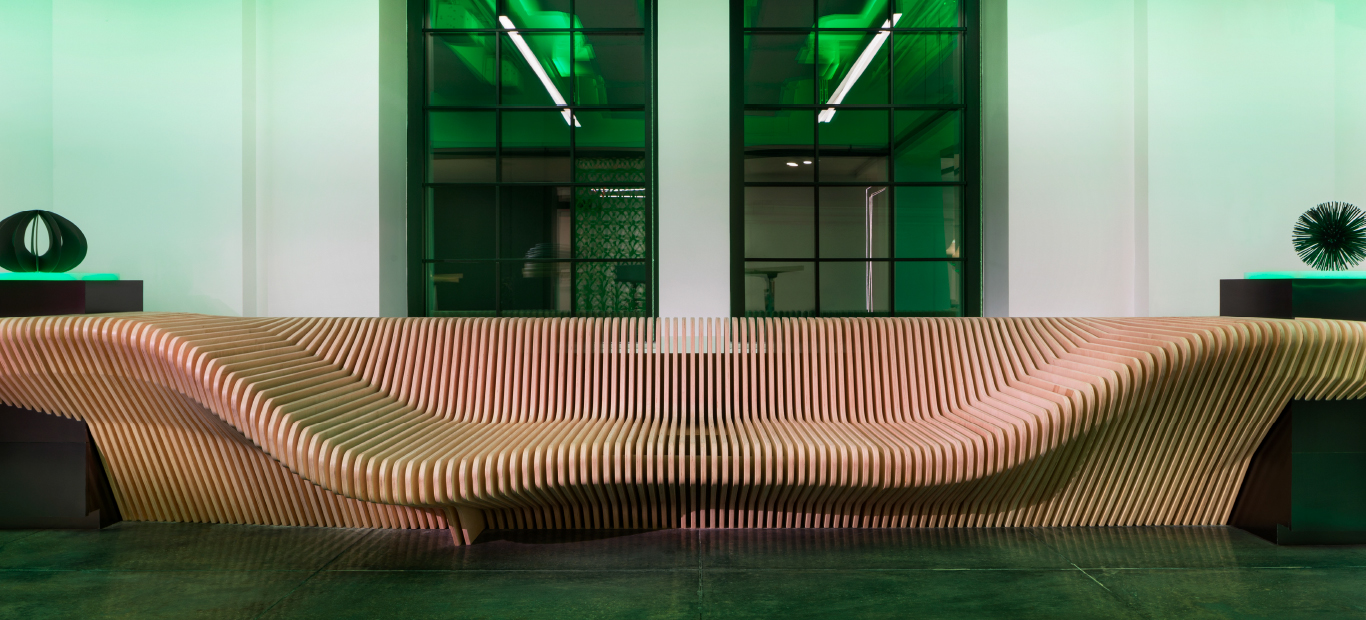
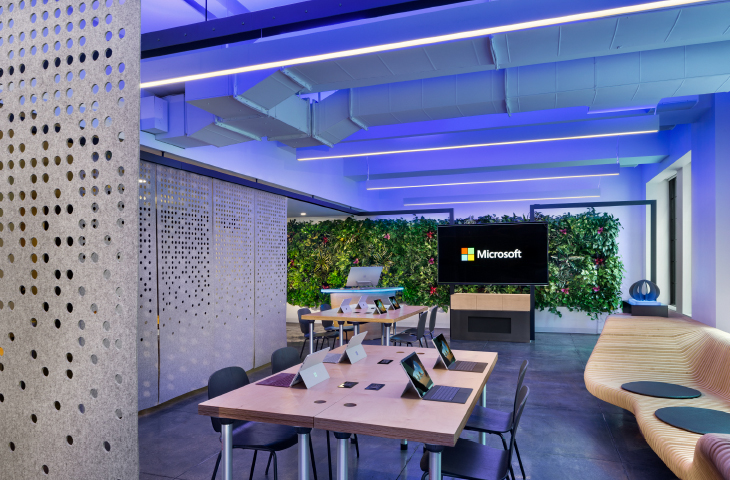

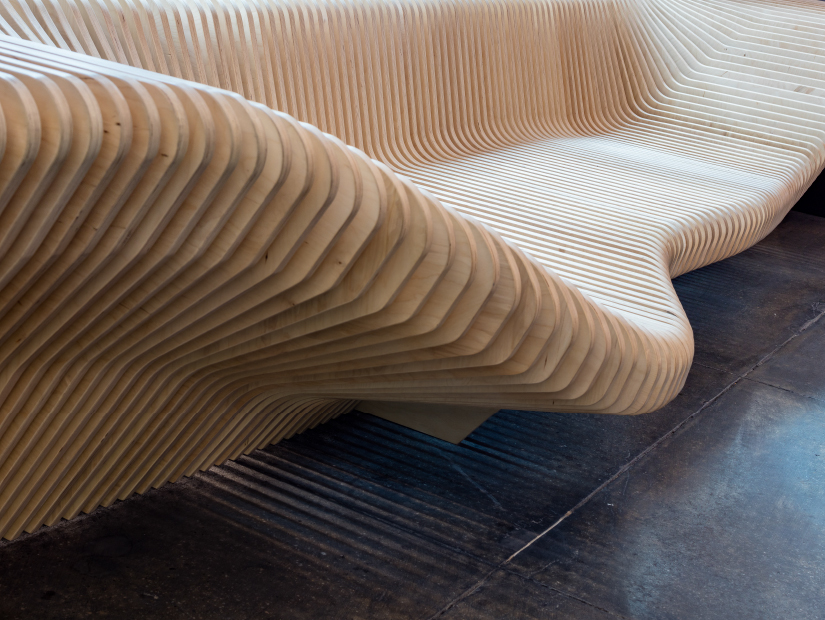
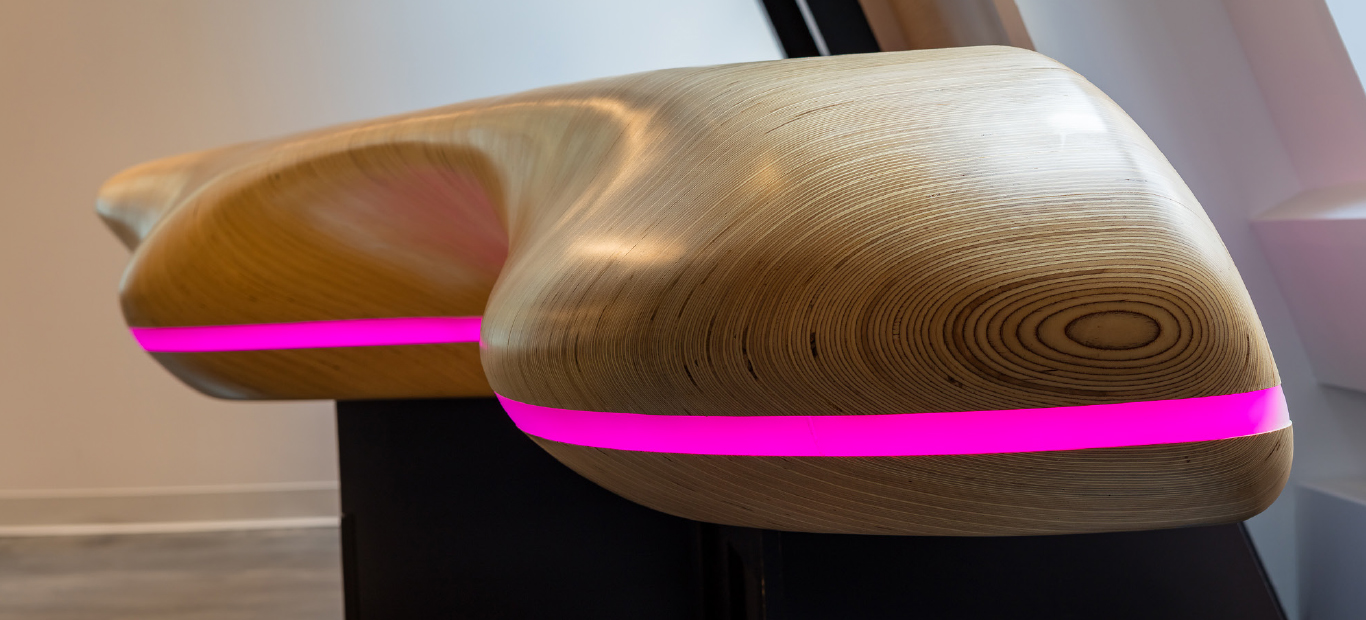
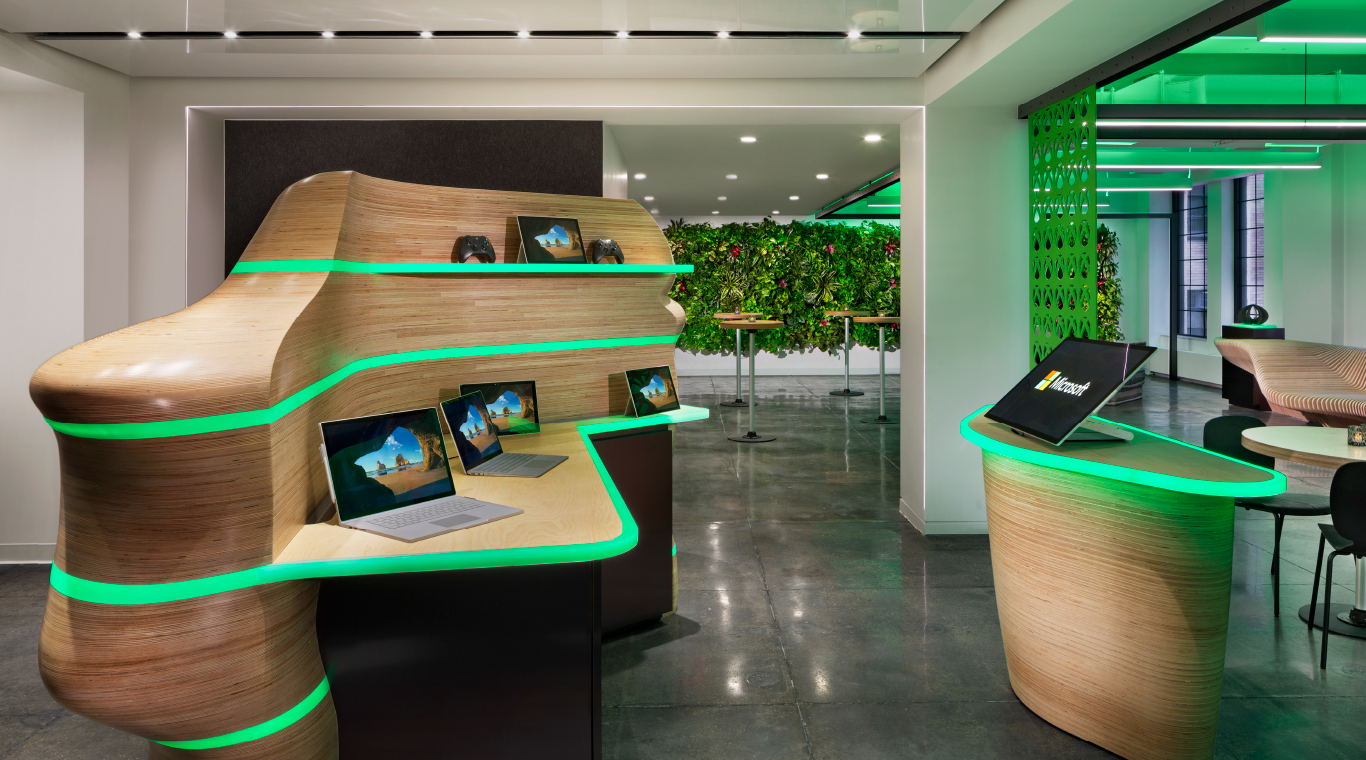
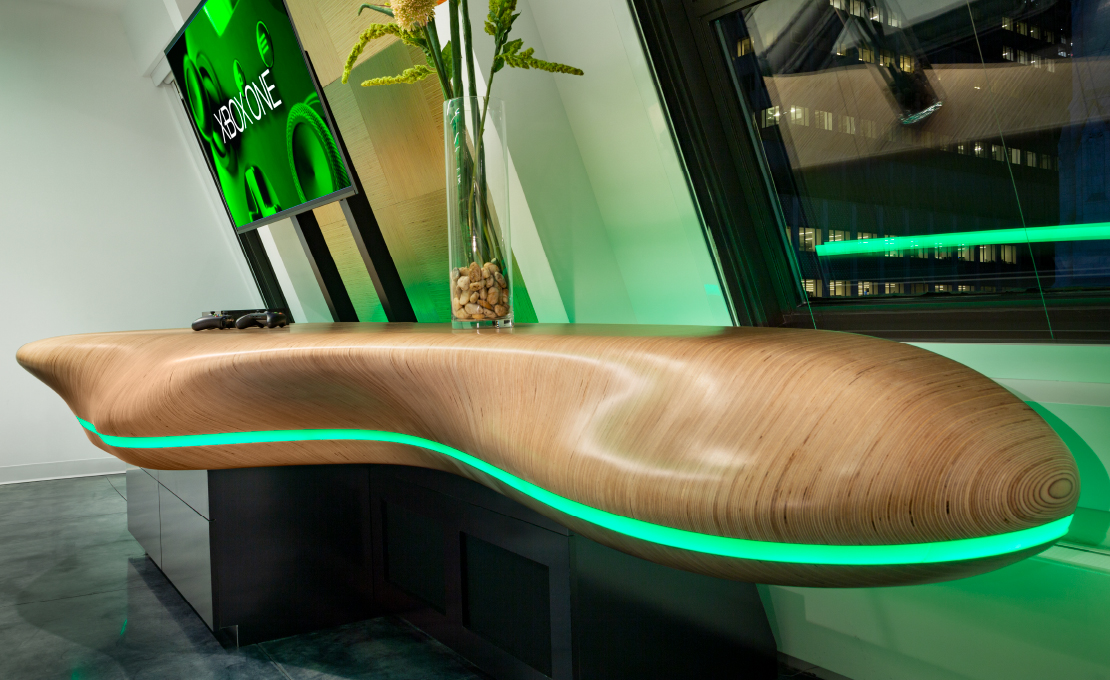
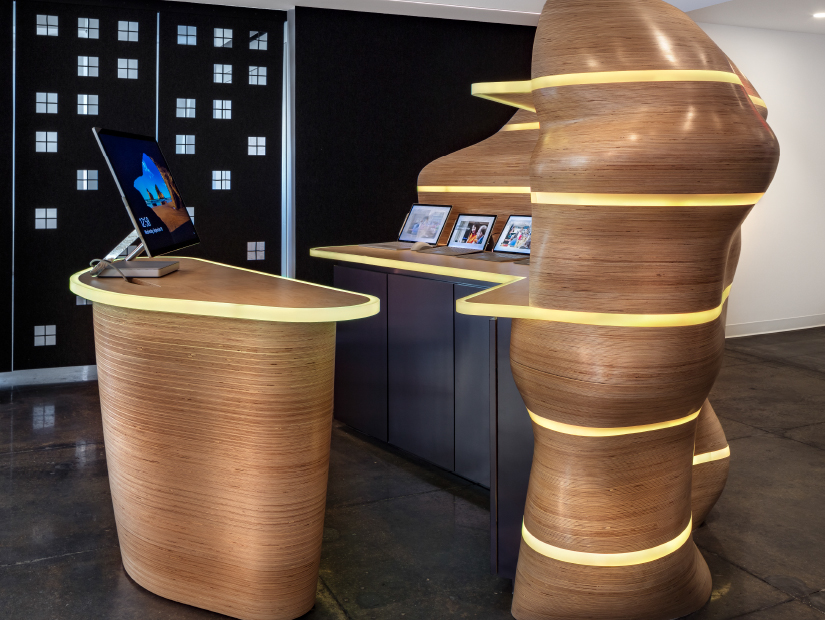
The sculptural forms were designed to invite tactile exploration, encouraging hands-on interaction within the space. This intentional design choice complements the loft's role as an experiential hub for guests.
Read more about the project at Purepartner.
Financial Times Interview with founders @The Factory NYC
→